For a long time, we had the idea of building a precious wood boat. Now my wife got enthusiastic about an Italian sports boat during our vacation. Since the Pedrazzini Vivale Veloce in its original form slightly exceeds our budget, we decided to build the Comtesse from aero-naut together.
As one of the few companies, aero-naut is still engaged in “real” model making. Despite the increasing demand for ready-made models at reasonable prices, the family-owned company, now in its 4th generation, remains true to the motto of its founder – MODEL MAKING is written “large”. The traditional company looked back on 100 successful years in 2022.
Unfortunately, ScaleMonkey cannot yet boast this long history of success, but we are working on it. So, let’s get started with model building. The Comtesse kit was ordered quickly and delivered really fast.
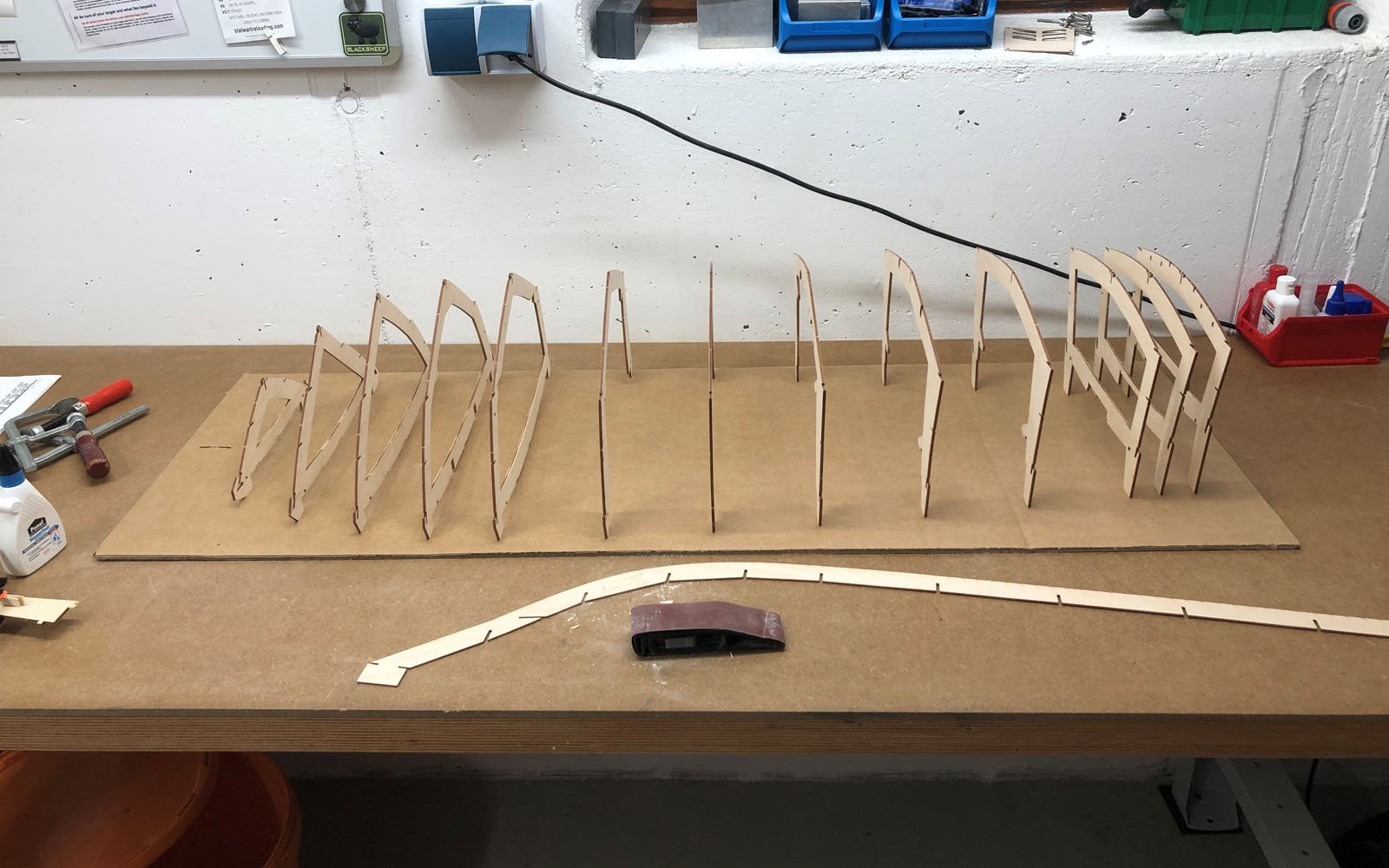
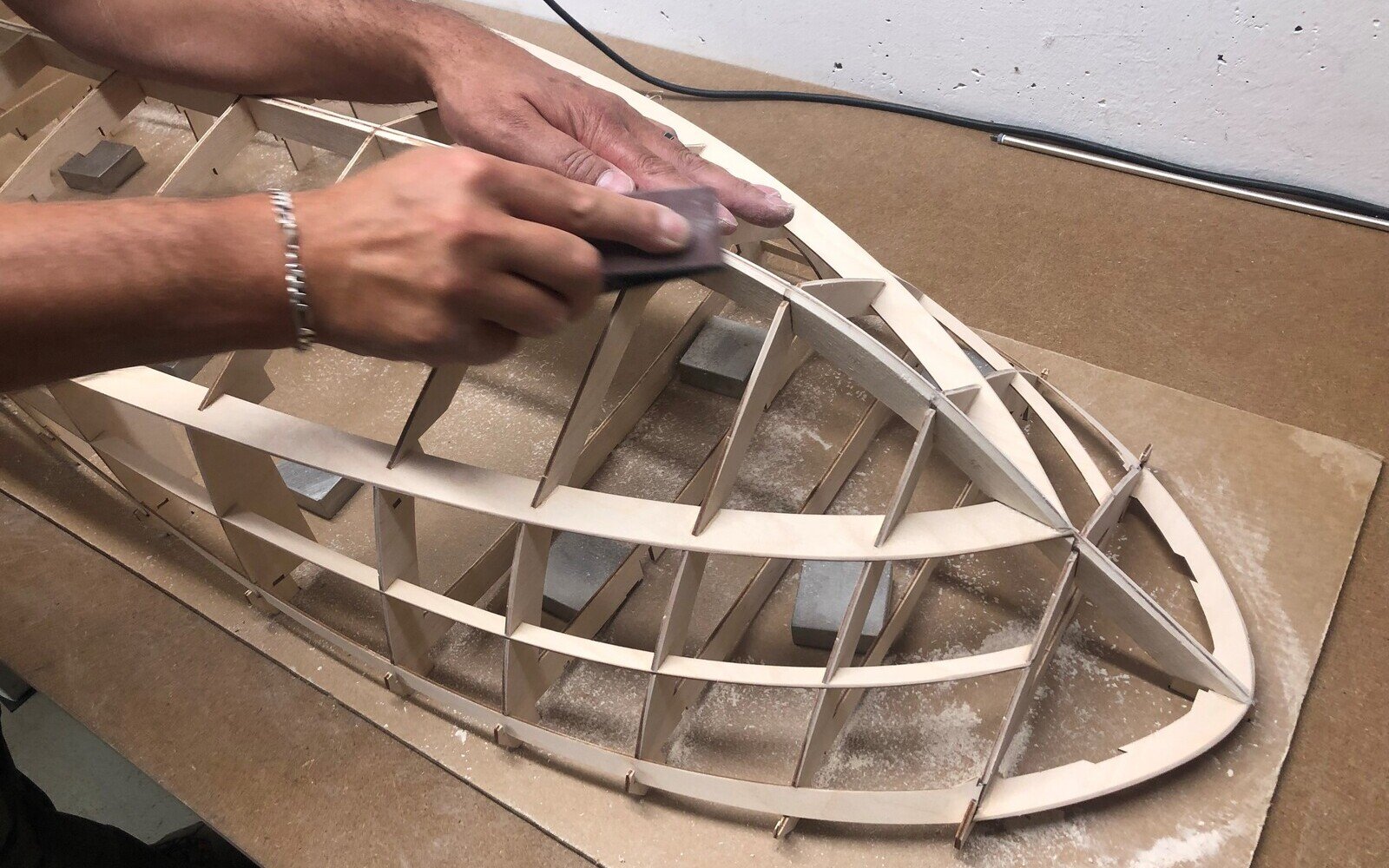
I don’t like the burn marks on laser-cut kits, so the first step was to sand all the frames, stringers, and deck supports. Furthermore, we deburred all inner edges, as this is still easy to do.
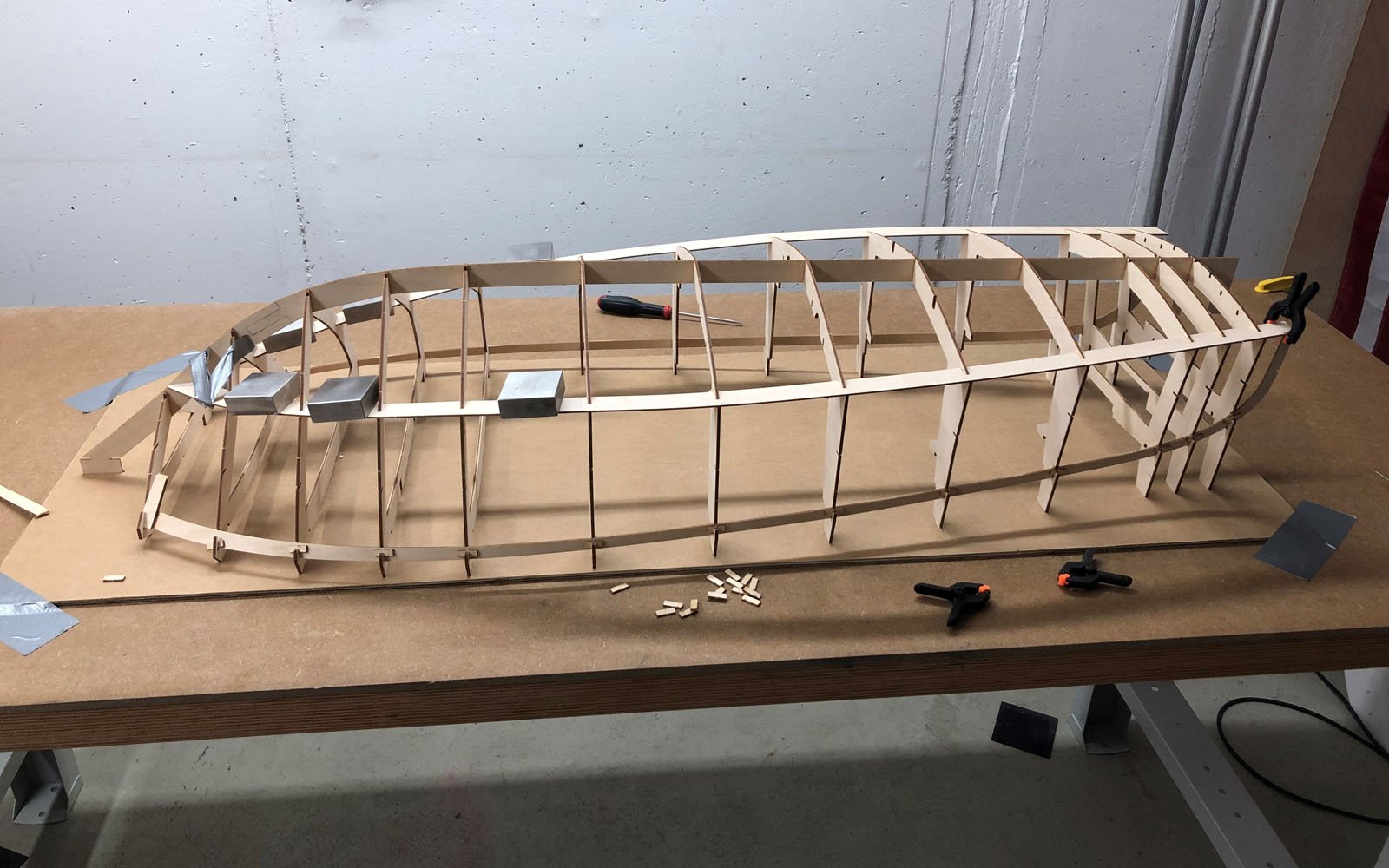
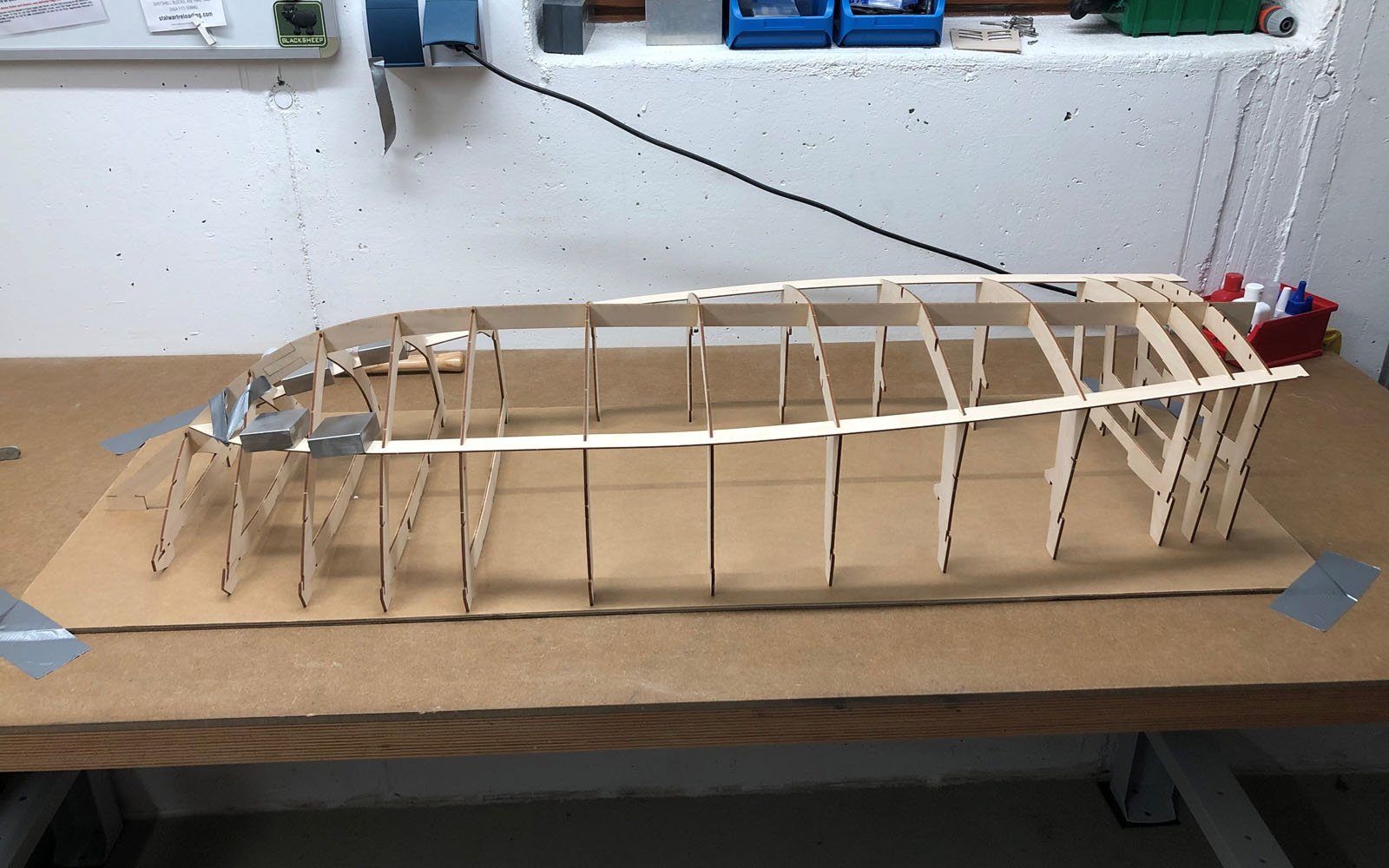
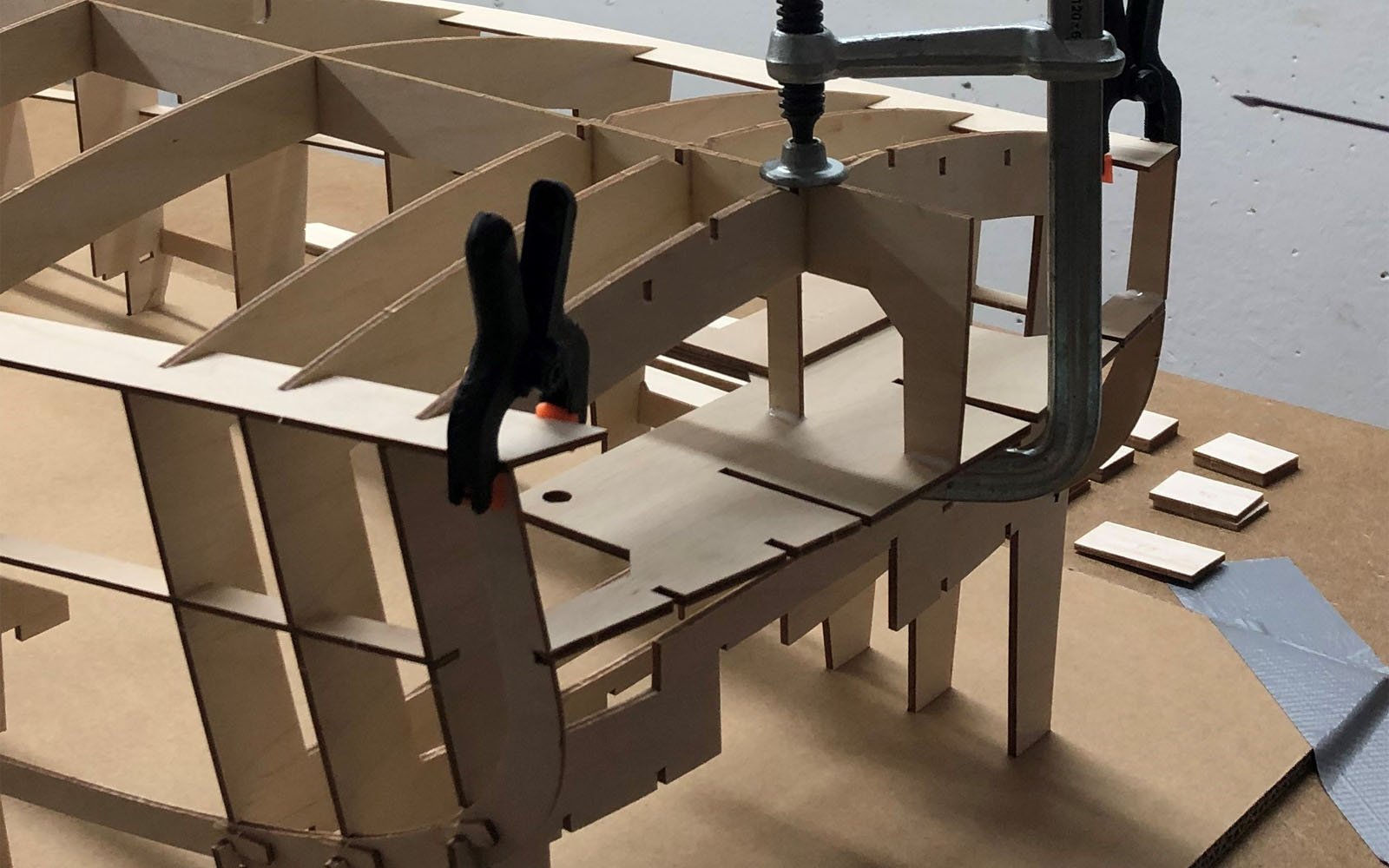
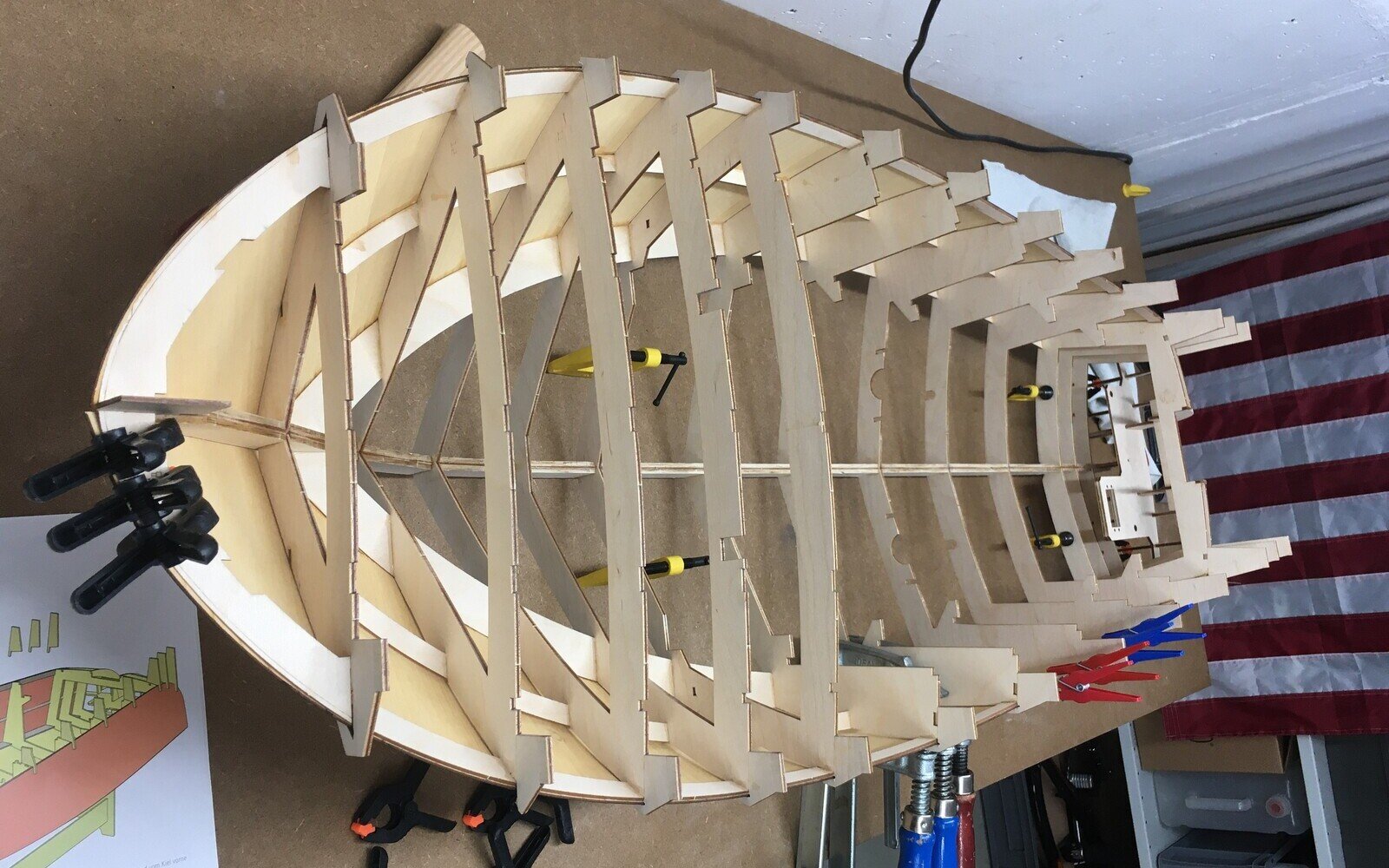
Now it was time for assembly. The parts fit together perfectly. There was a small inaccuracy on frame 13 to deck layer 17. We fixed this with a small piece of plywood, which we used as a knot, and then glued everything neatly with white glue.
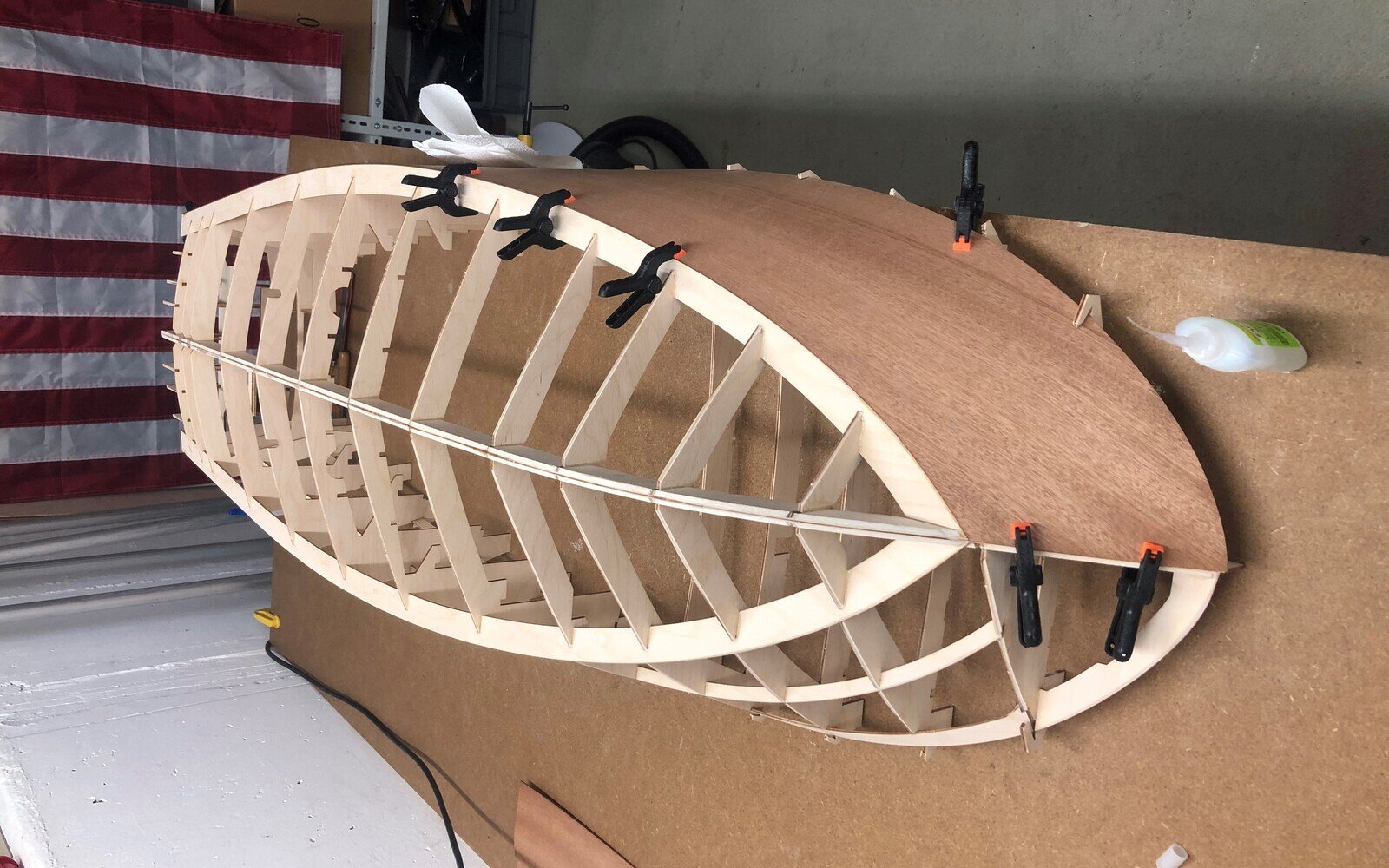
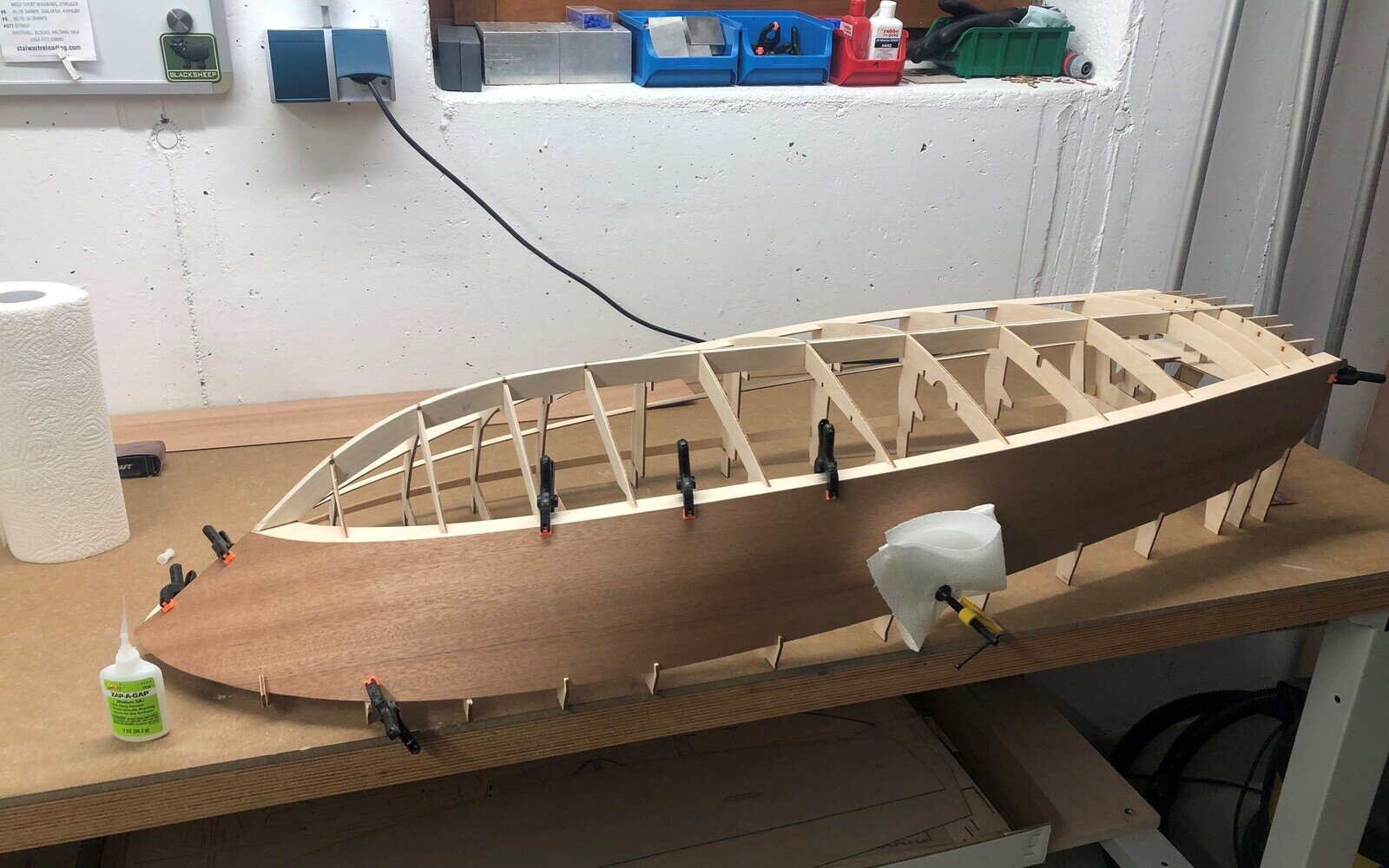
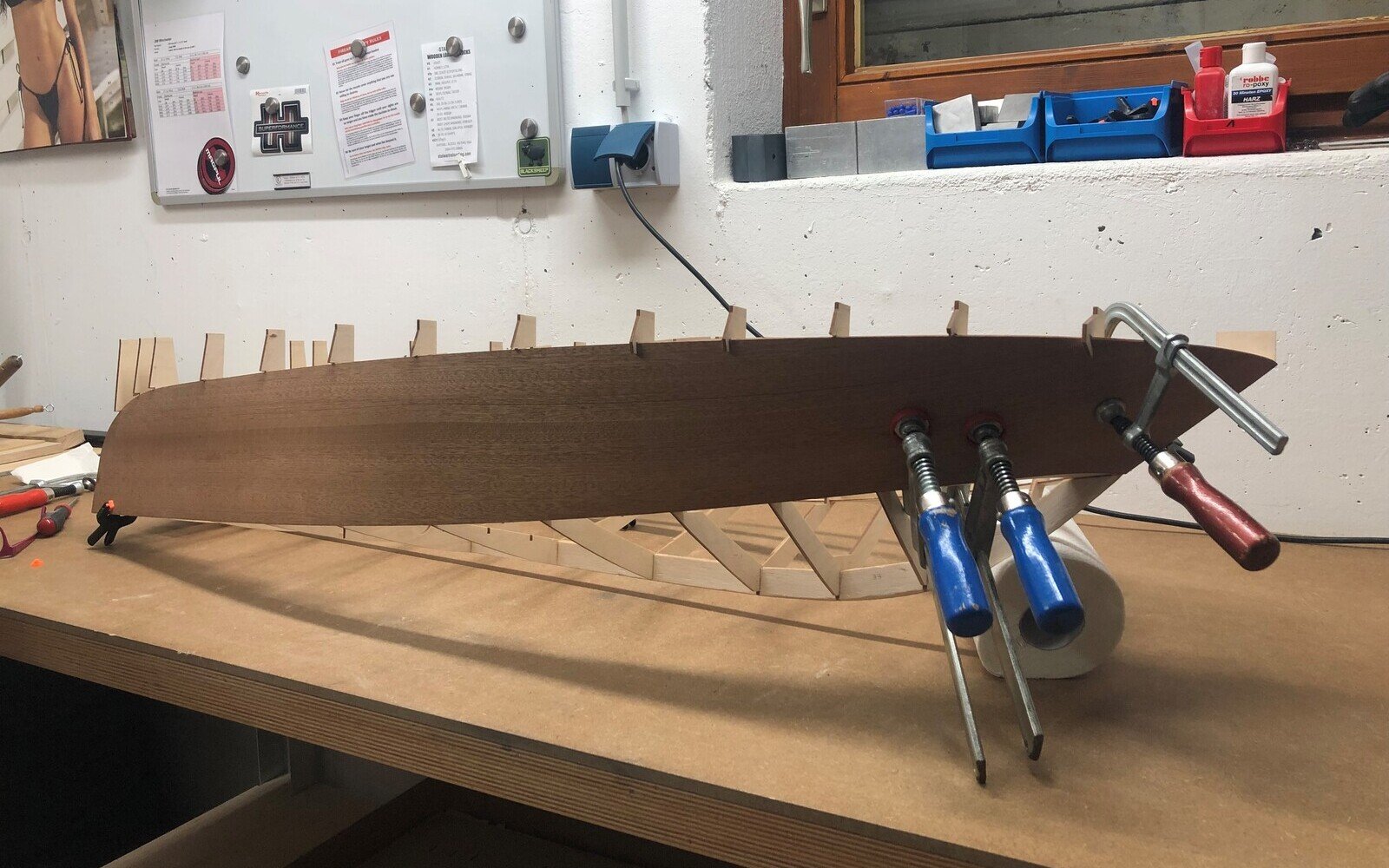
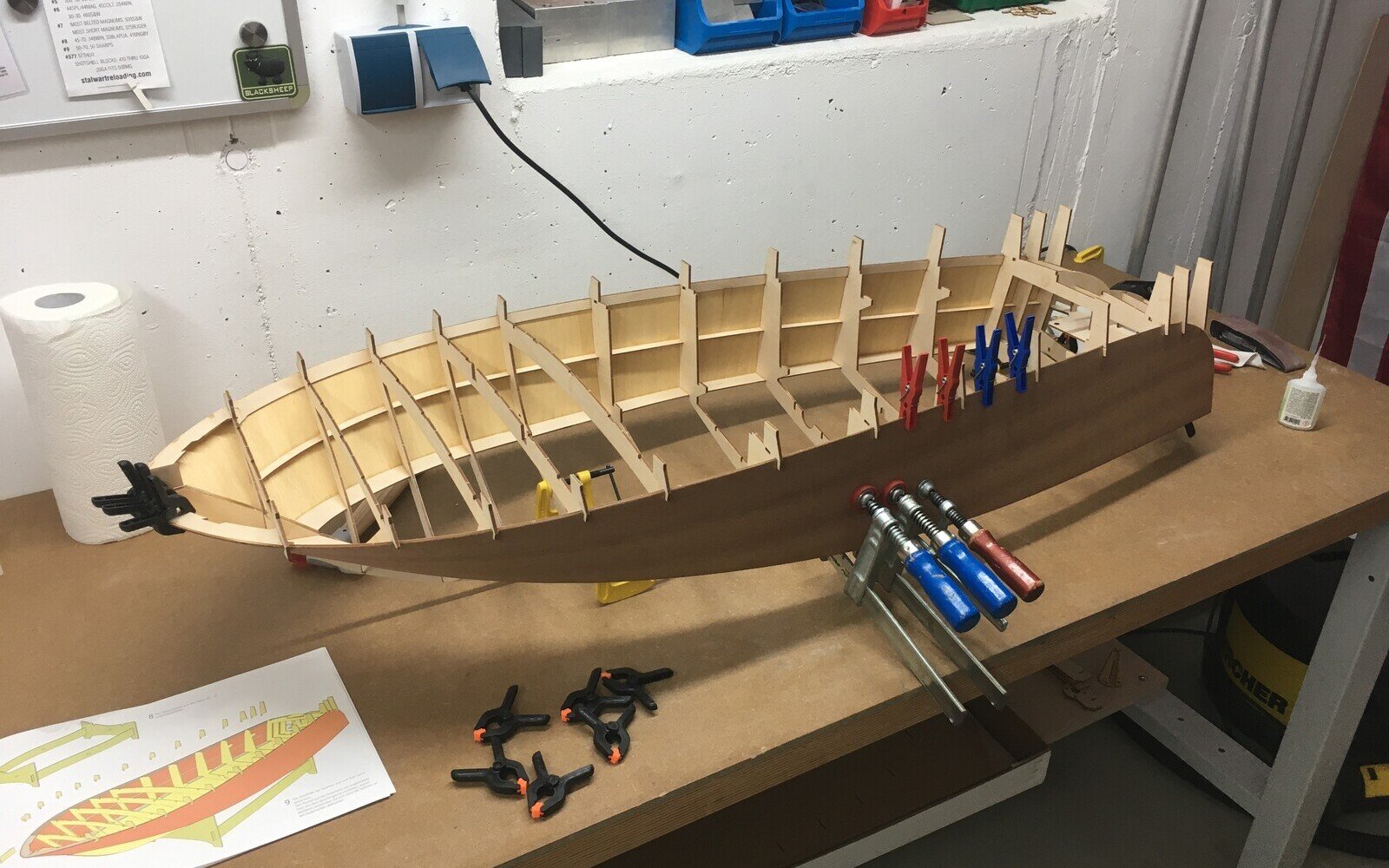
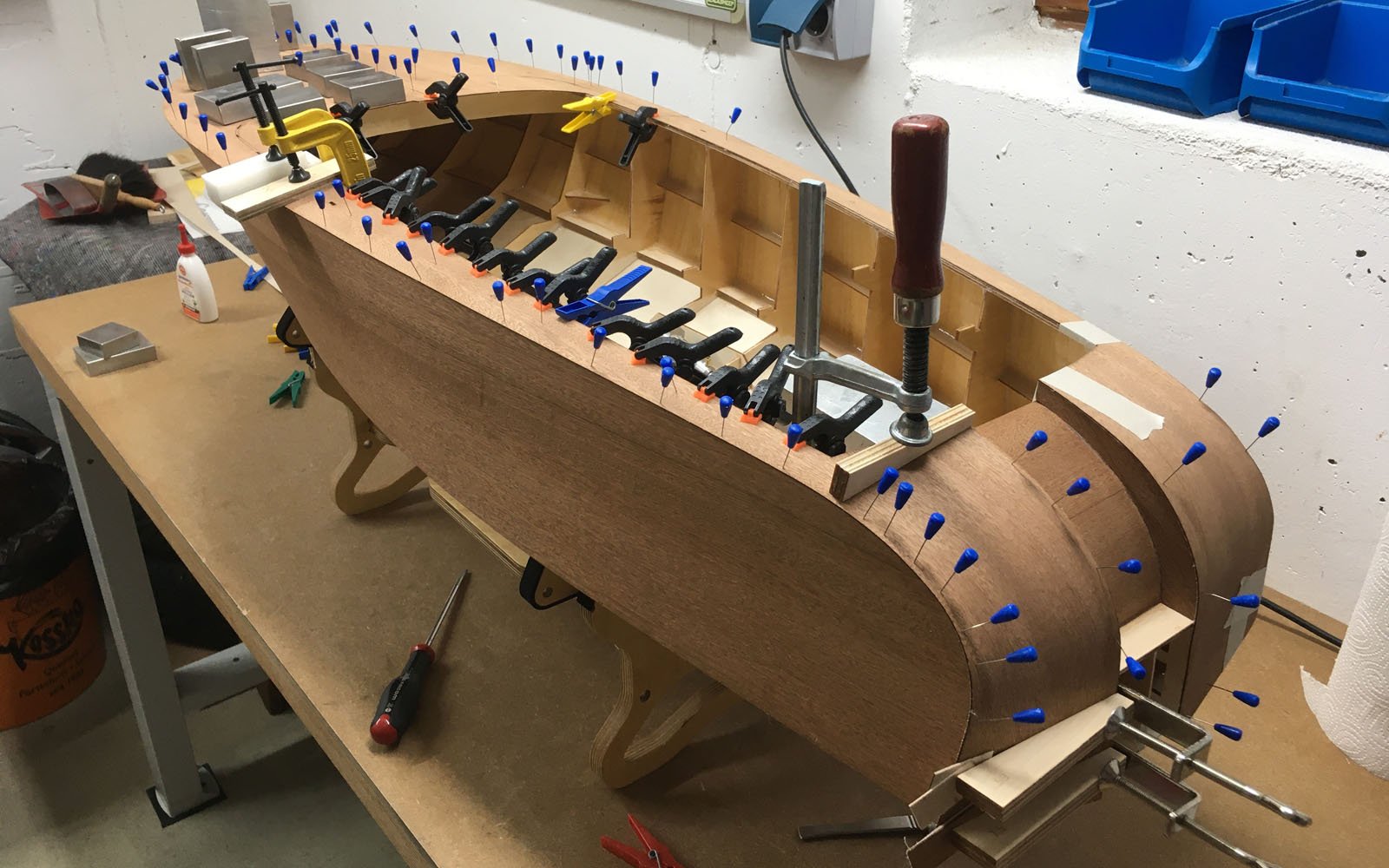
The gluing of the side walls has hardened and we are very satisfied with the result. Now it’s time for the underwater hull. The parts fit very well on the frame structure in terms of shape. In order to get a nice gliding surface or tear-off edge for the water at the end, I sanded the plywood floor exactly to the gliding surface (part 16).
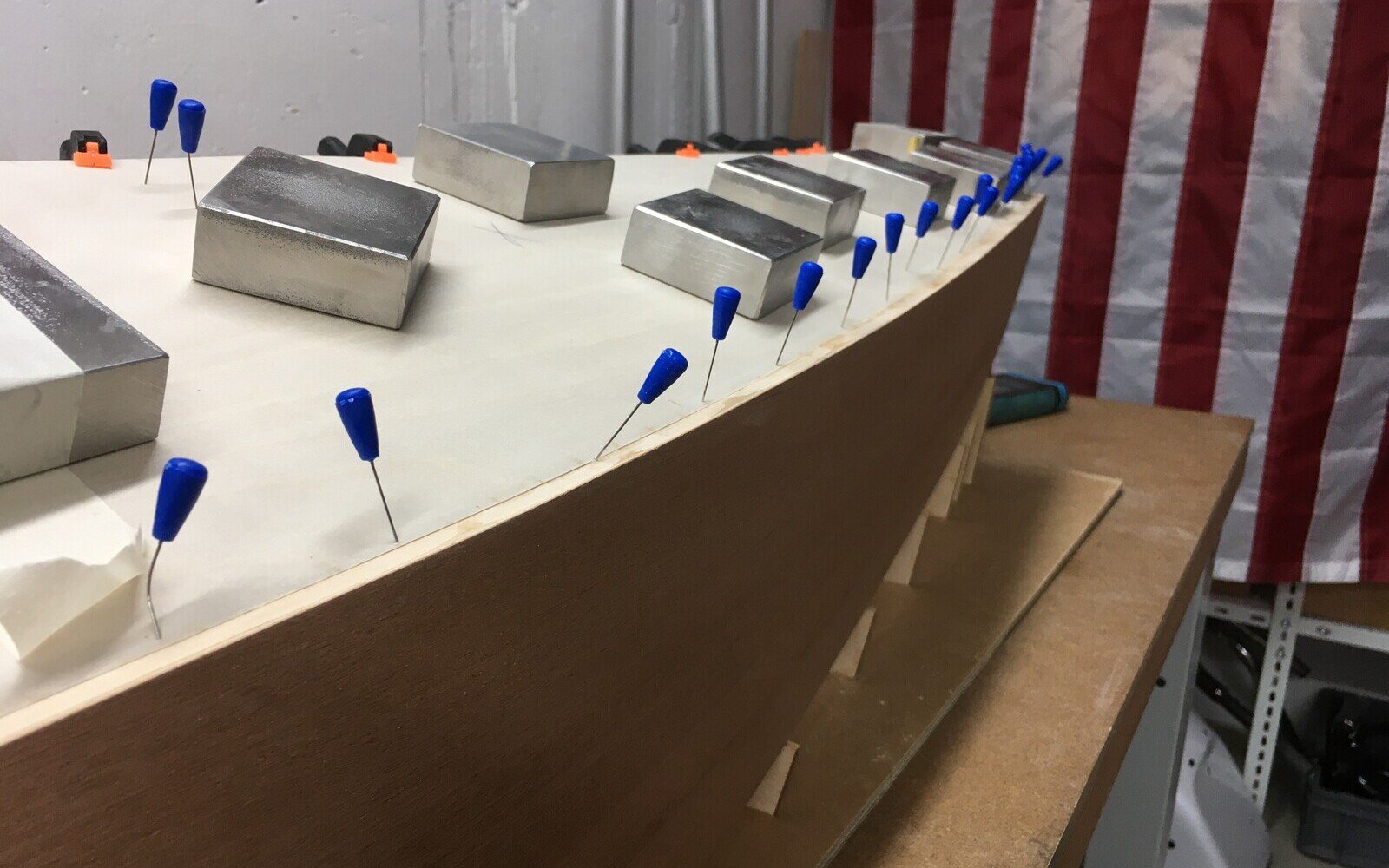
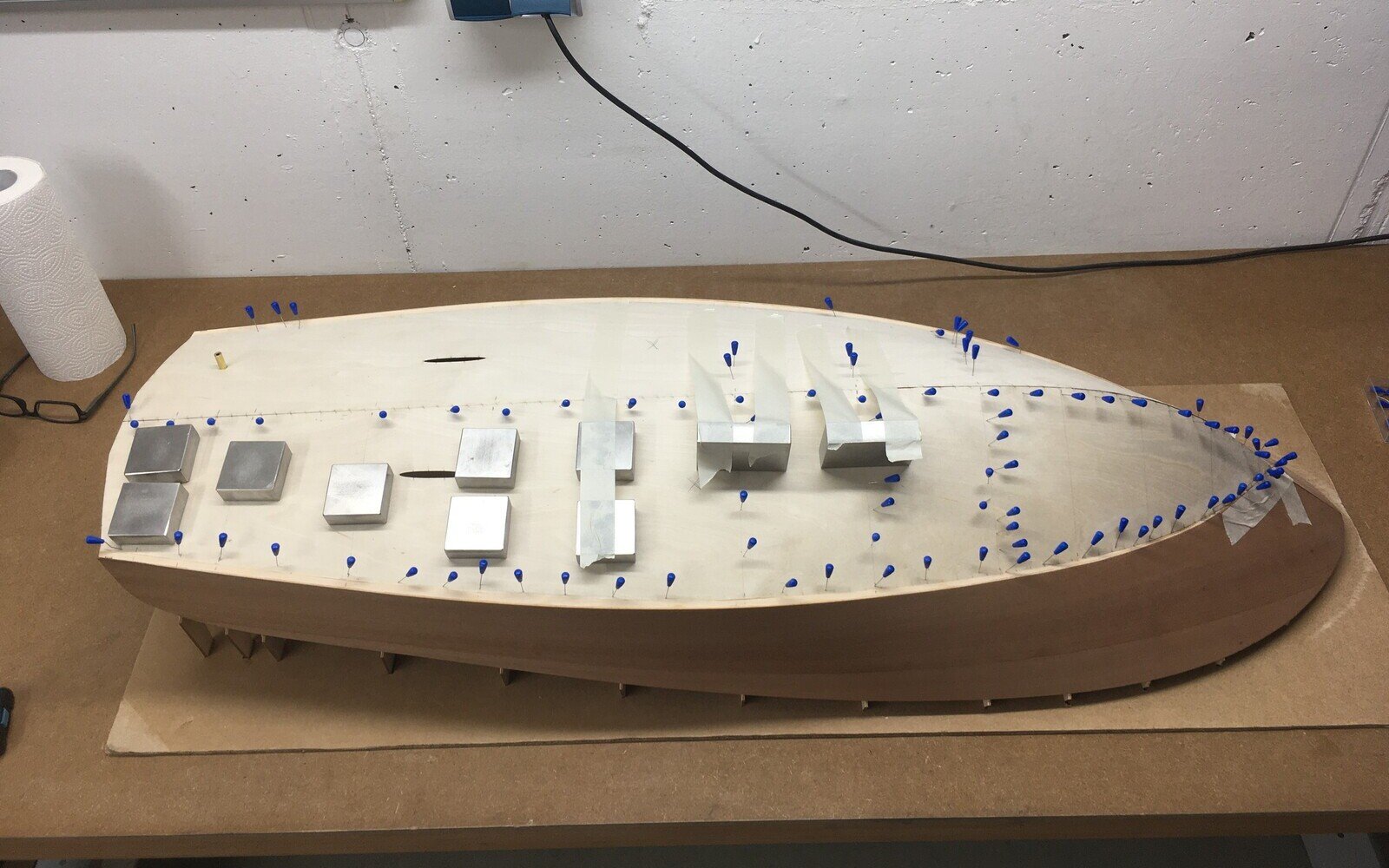
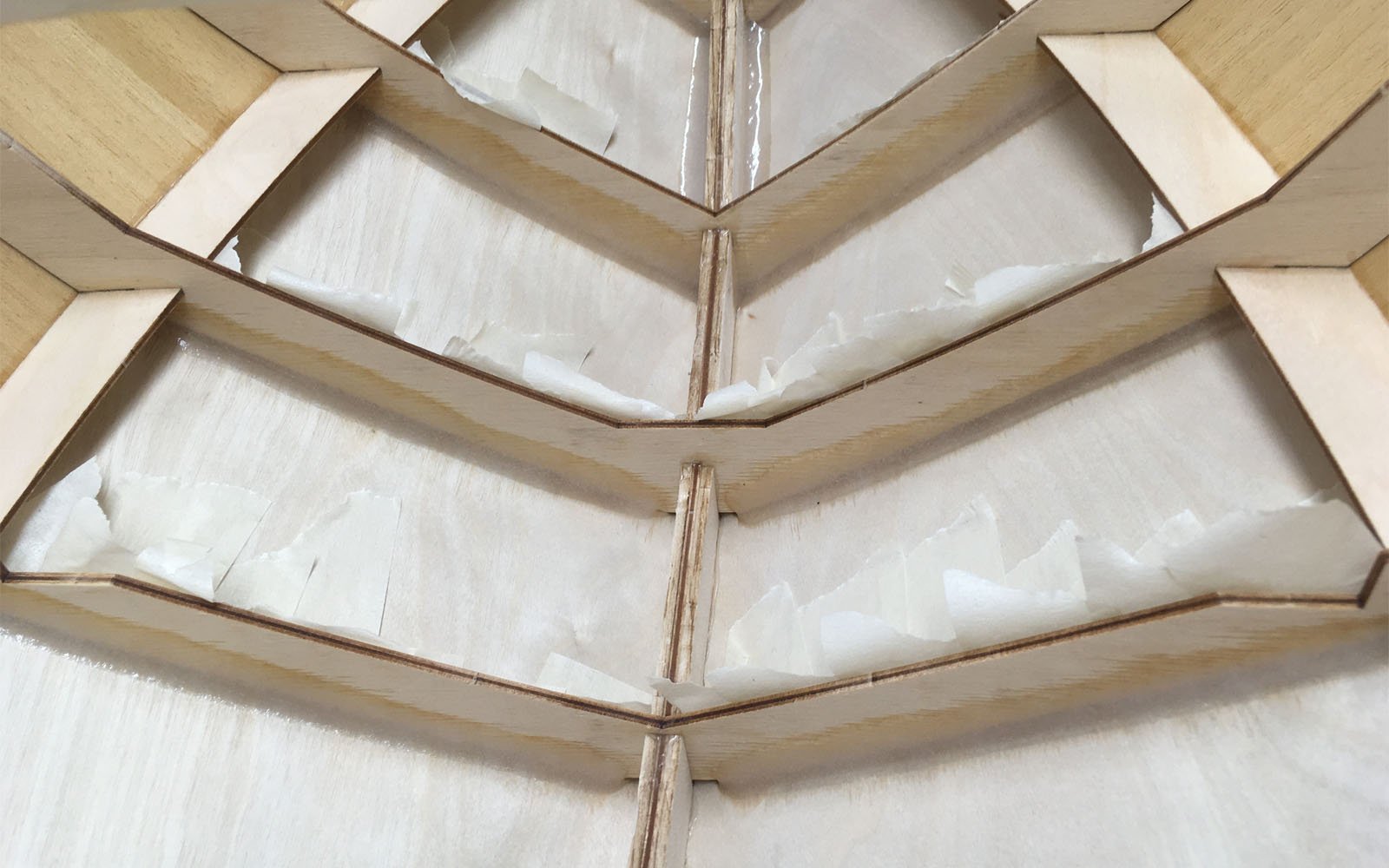
Then we applied undiluted white glue to the frame structure and, as described in the description, aligned and fixed the parts from the bow along the keel. The parts also lie optimally on the frame of our boat, only there is a small gap at frames 9, 10 and 11. We did not press these on, but fill them with thickened epoxy resin.
We always use the epoxy resin L and hardener L from R&G for such work, as well as cotton flock or thixotropic agent, depending on requirements. This is not the fastest resin, but it penetrates deep into the wood, has excellent strength, but also elasticity.
But let’s put it this way… Model making is NOT about speed (during construction, of course), it’s a hobby and the result counts.
Yes, as briefly written in the previous post, the resin system we prefer is not exactly the fastest. Thus, gluing the individual frames and the inside of the hull with viscous resin is a little time-consuming. But this also has its advantages, you discover some things that are not so optimally solved. But more on that later …
Before we put the boat in the most impossible positions to harden, we always did small things to move the construction forward a little. This is how the frame for the deck structure was created and the rear staircase was glued in. In the next few days, we then shaped it “what an effort to grind” But for now, we are very satisfied with the result.
Now that we have been spending days coating our boat with thick resin from the inside, there is a lot of time for smaller jobs in between. So we have already reinforced the transom and milled some of the required recesses.
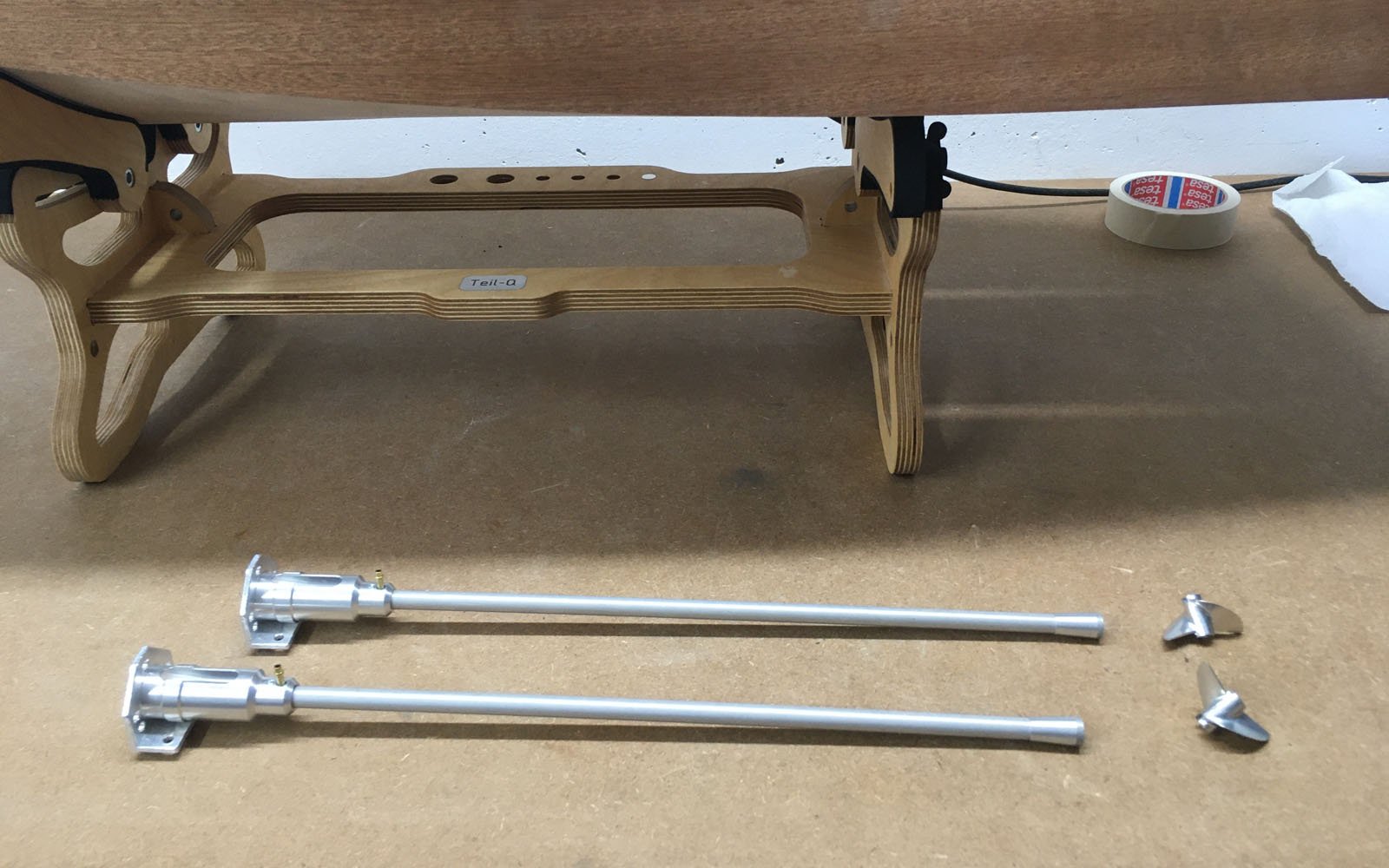
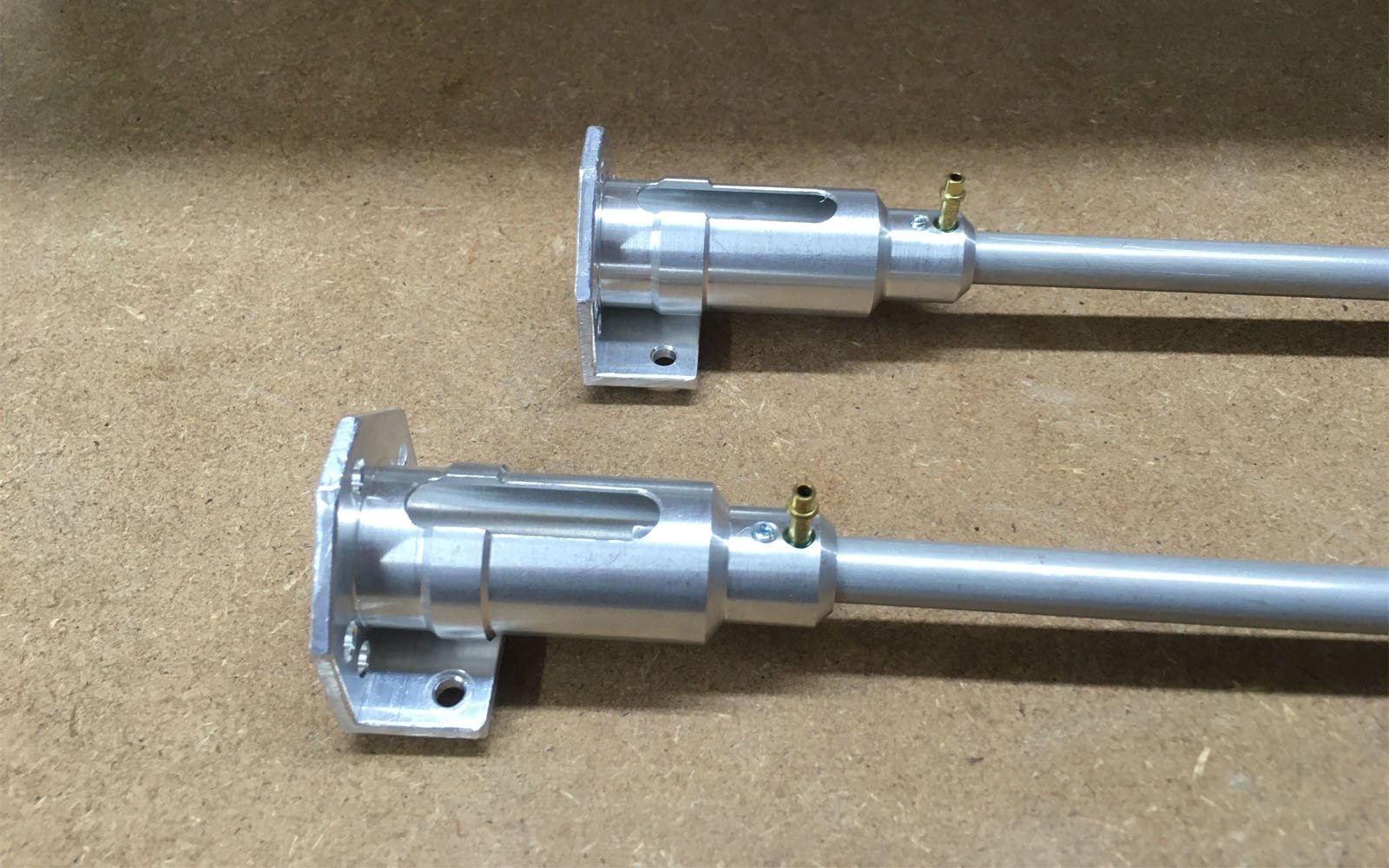
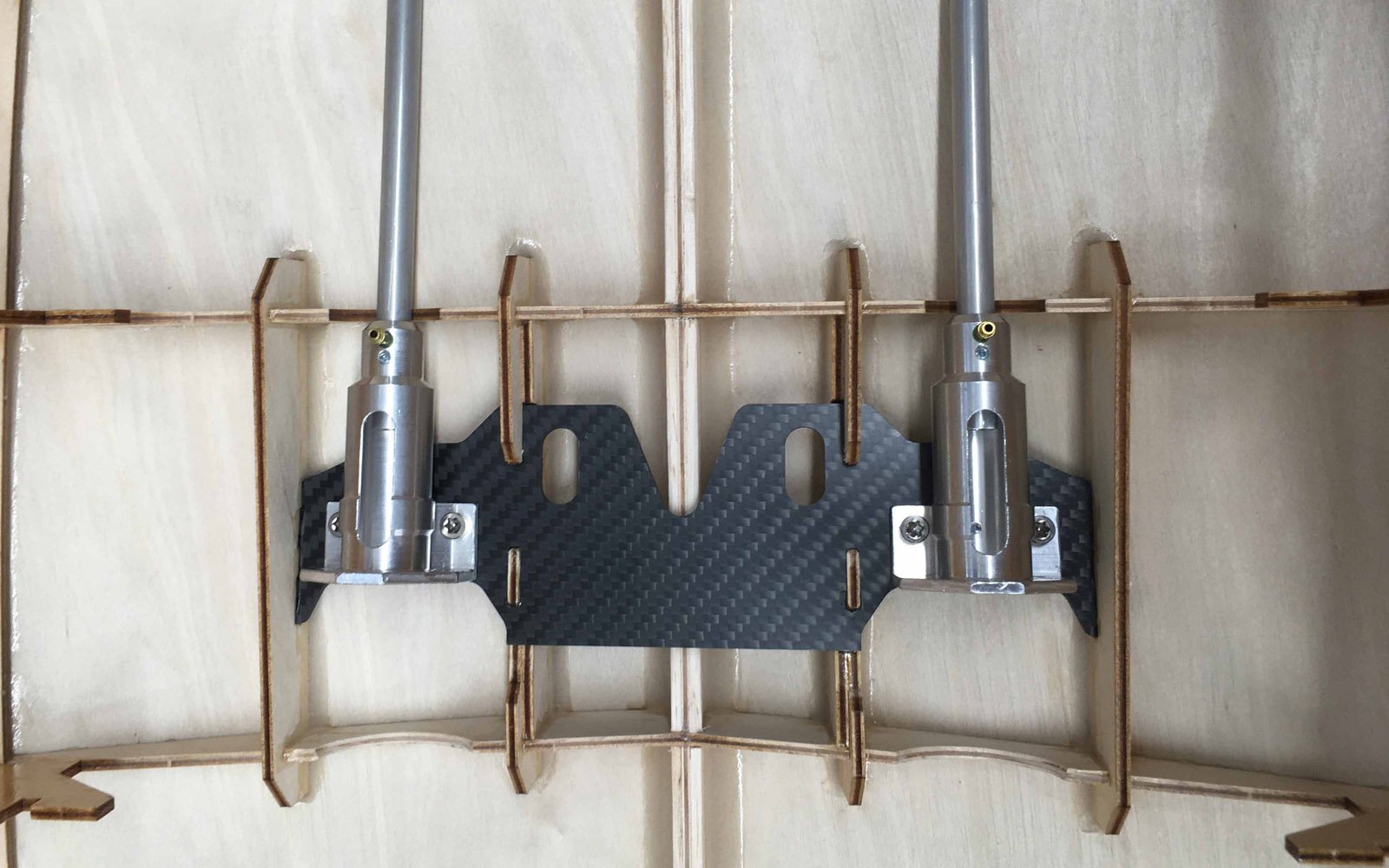
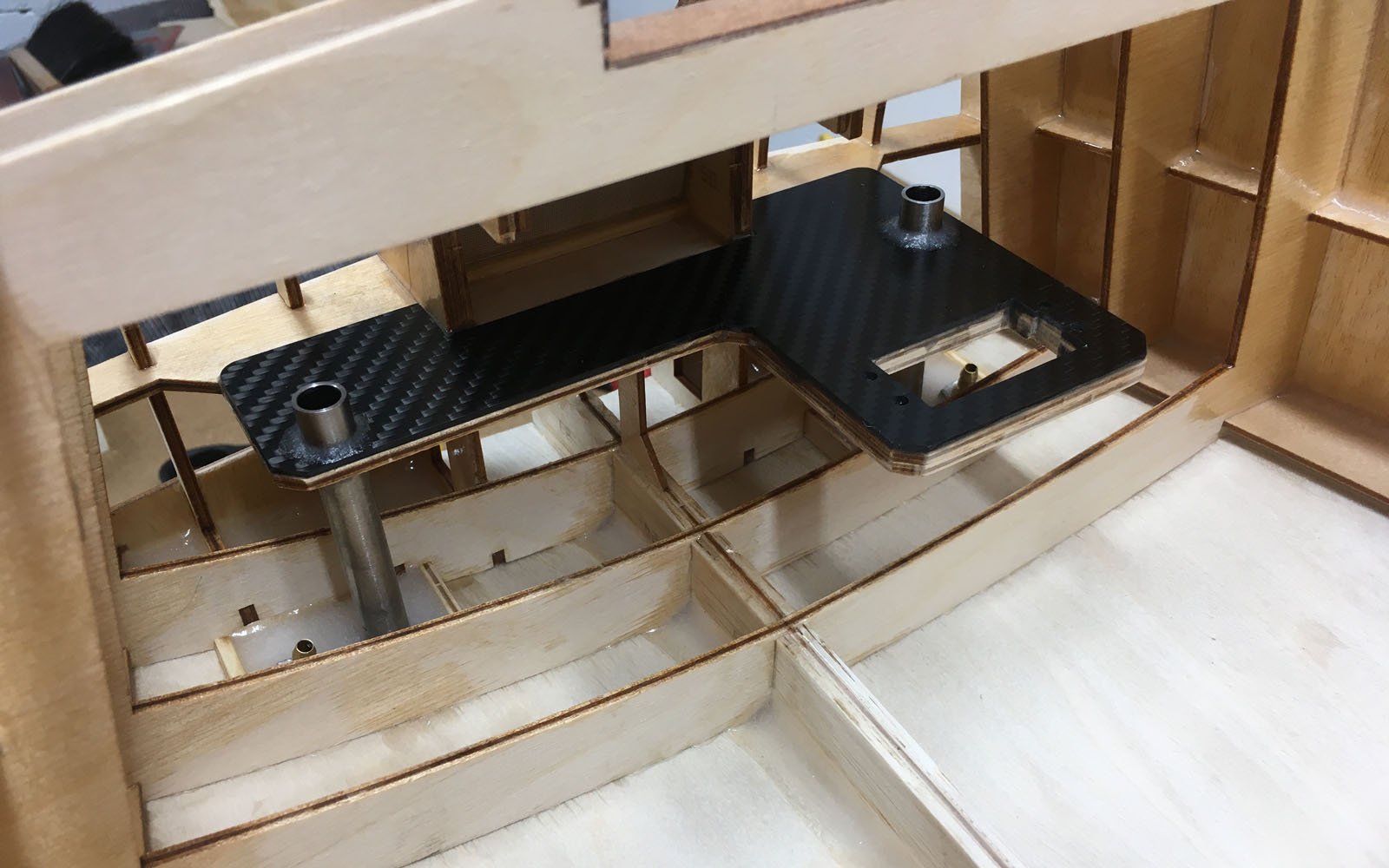
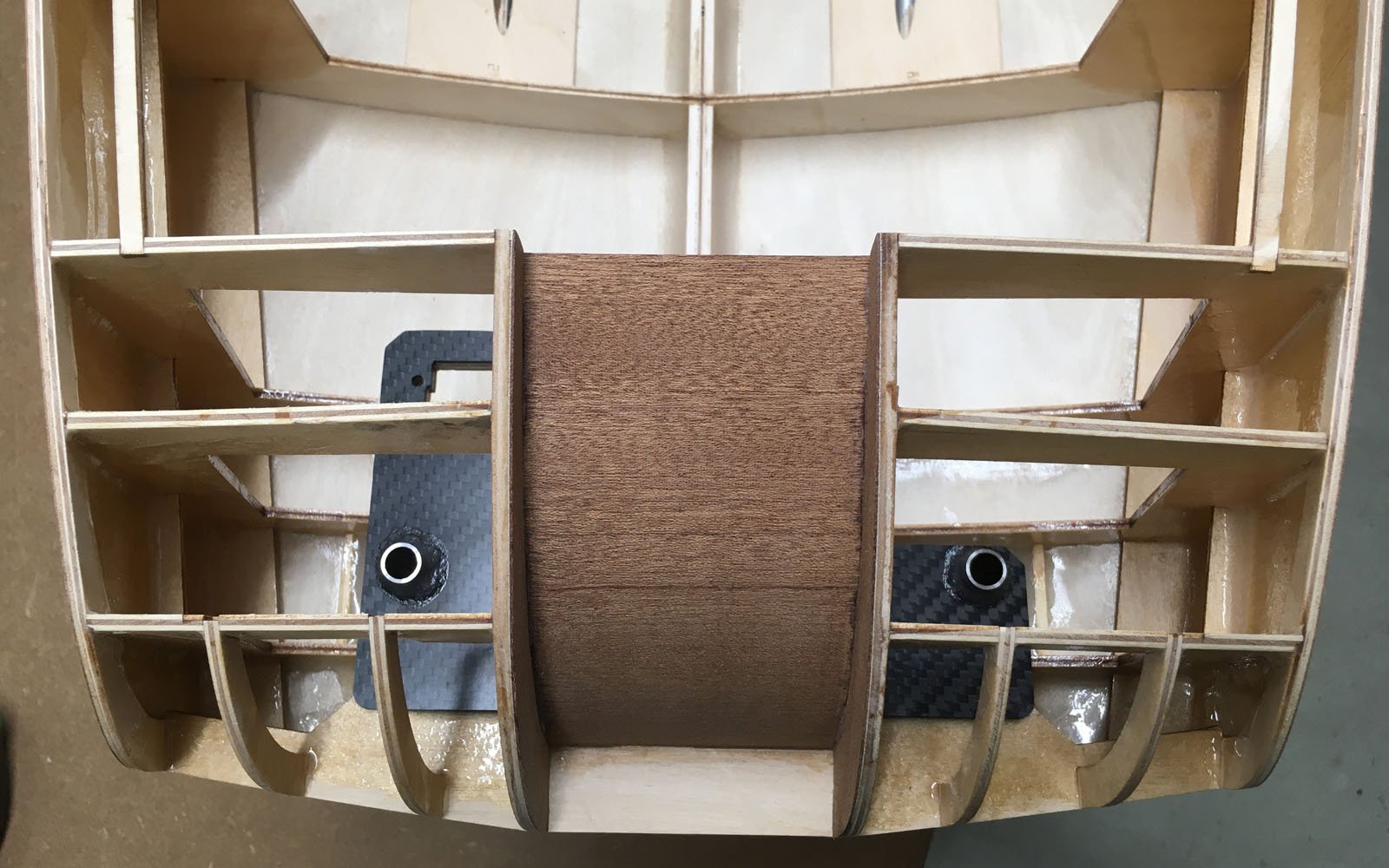
So, now let’s get to the drive. The original from aero-naut “well” may work, but it is not really what we imagine for our boat. We wouldn’t be ScaleMonkey if we didn’t go one better in terms of technology, and that’s exactly why we chose the Gundert shaft system. These are rigidly connected to the motors, which guarantees perfect concentricity and thus a low-vibration rotation of the shafts. For the drives, I made a motor mount made of carbon with special mounts, so that they can be easily installed and removed later. It was quite a tricky task to get all the angles right, but it fits.
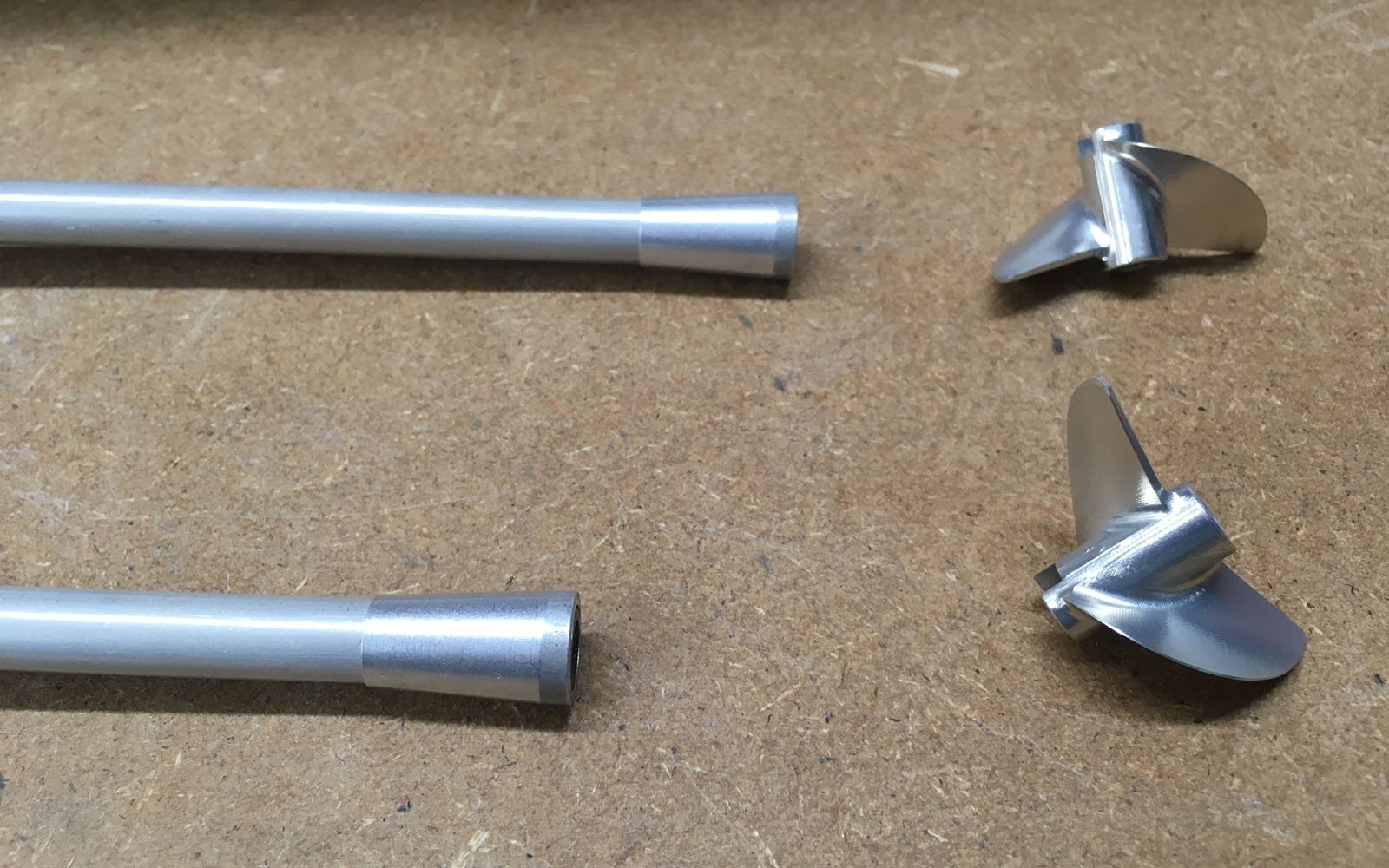
The shafts of our system are 5 mm thick and mounted on plain and ball bearings. For the propeller mount we use a 3/16 DogDrive.
Similar changes are also being made to the rudder system, because a 3 mm brass shaft … that can’t really work. Here I use a 5 mm shaft with a stainless steel blade. This combination should also withstand a more agile cornering.
Our rudder system is designed for very powerful servos, such as the KST BLS 359 WP or the KST CM3510MG V6.0. These two servos from KST are waterproof and have an output of 28 Kgf.cm and 35Kgf.cm respectively. For this reason, we decided to reinforce the original servo board from aero-naut so that it does not warp. For this purpose, a carbon overlay was milled, which is glued to the original board. You can purchase this servo board as well as the rudder system in our shop.
The installation of the servo board should be done, if possible, before planking the deck, so there is enough space to make the holes for the new rudder tubes. However, it is also possible afterwards with a little extra effort. When gluing the rudder tubes into the hull, we also immediately incorporated the cooling water inlets for the speed controllers.
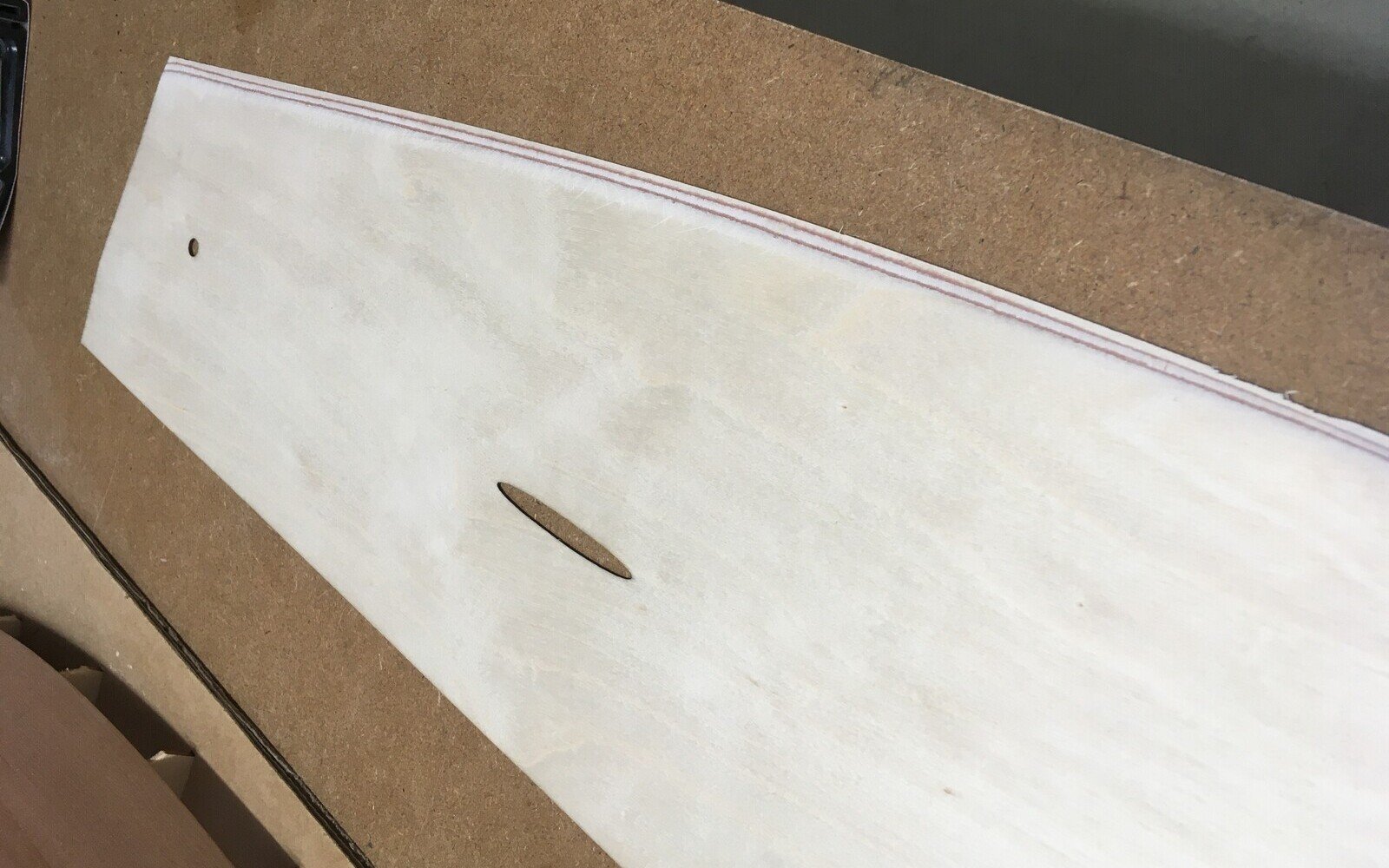
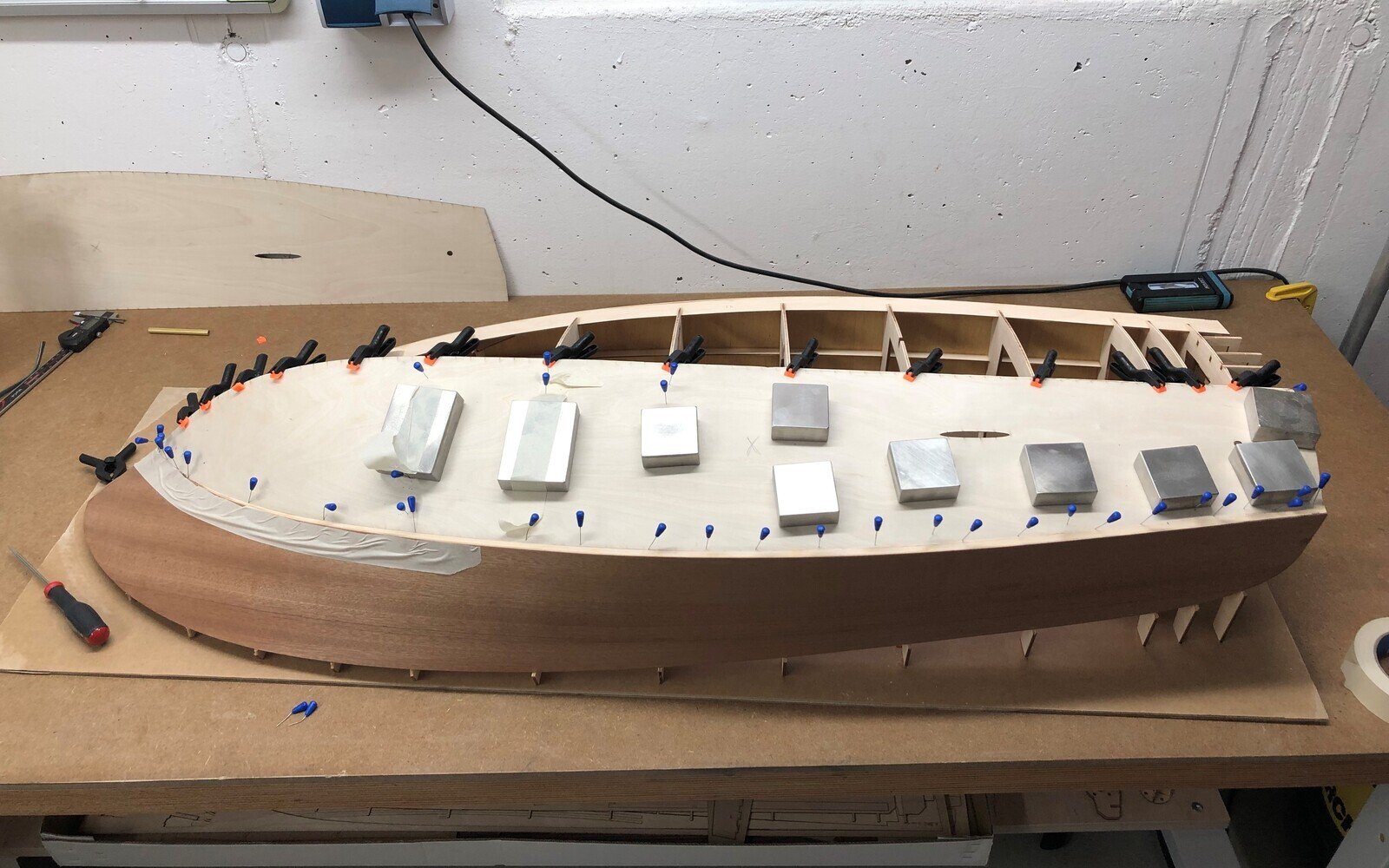
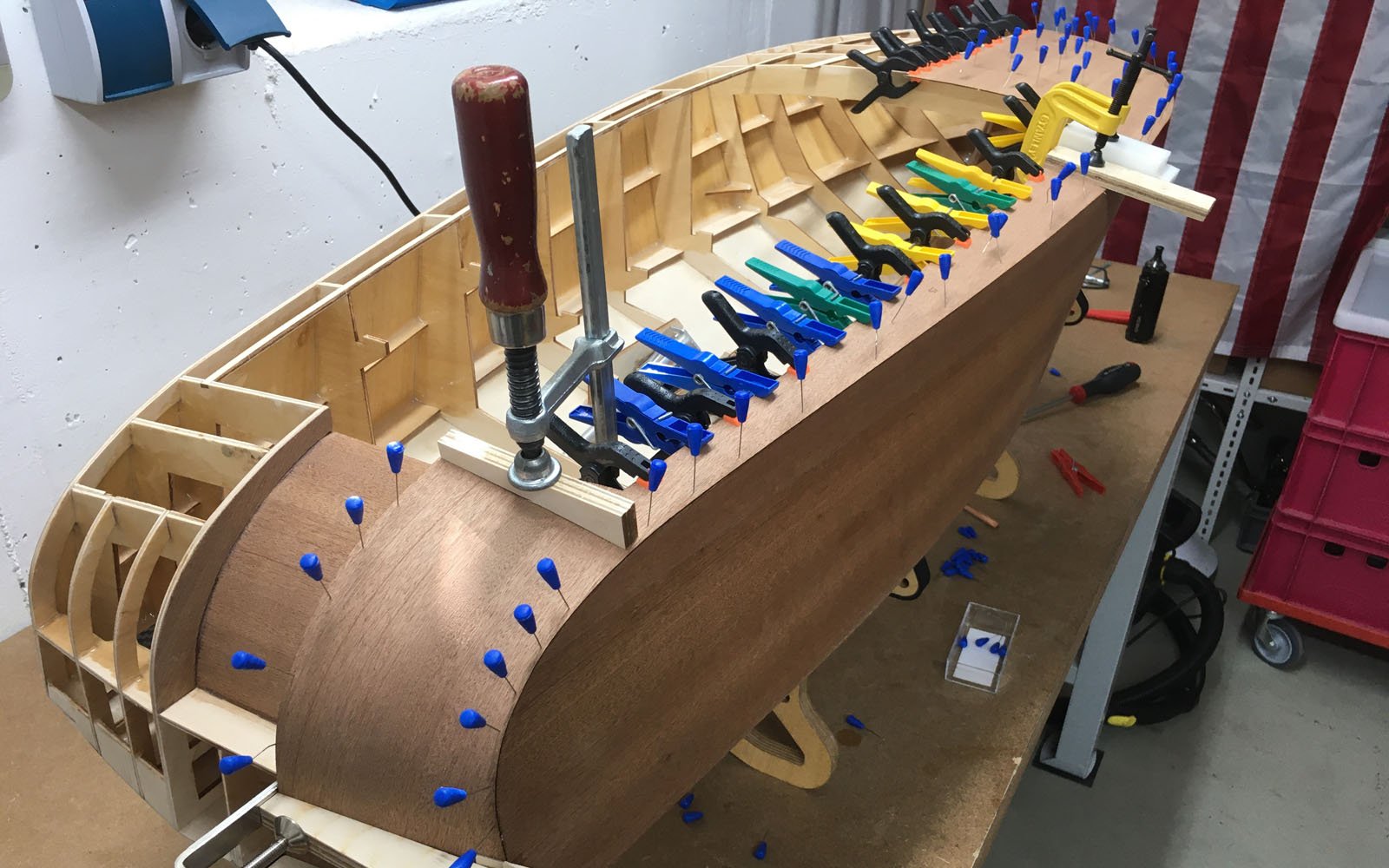
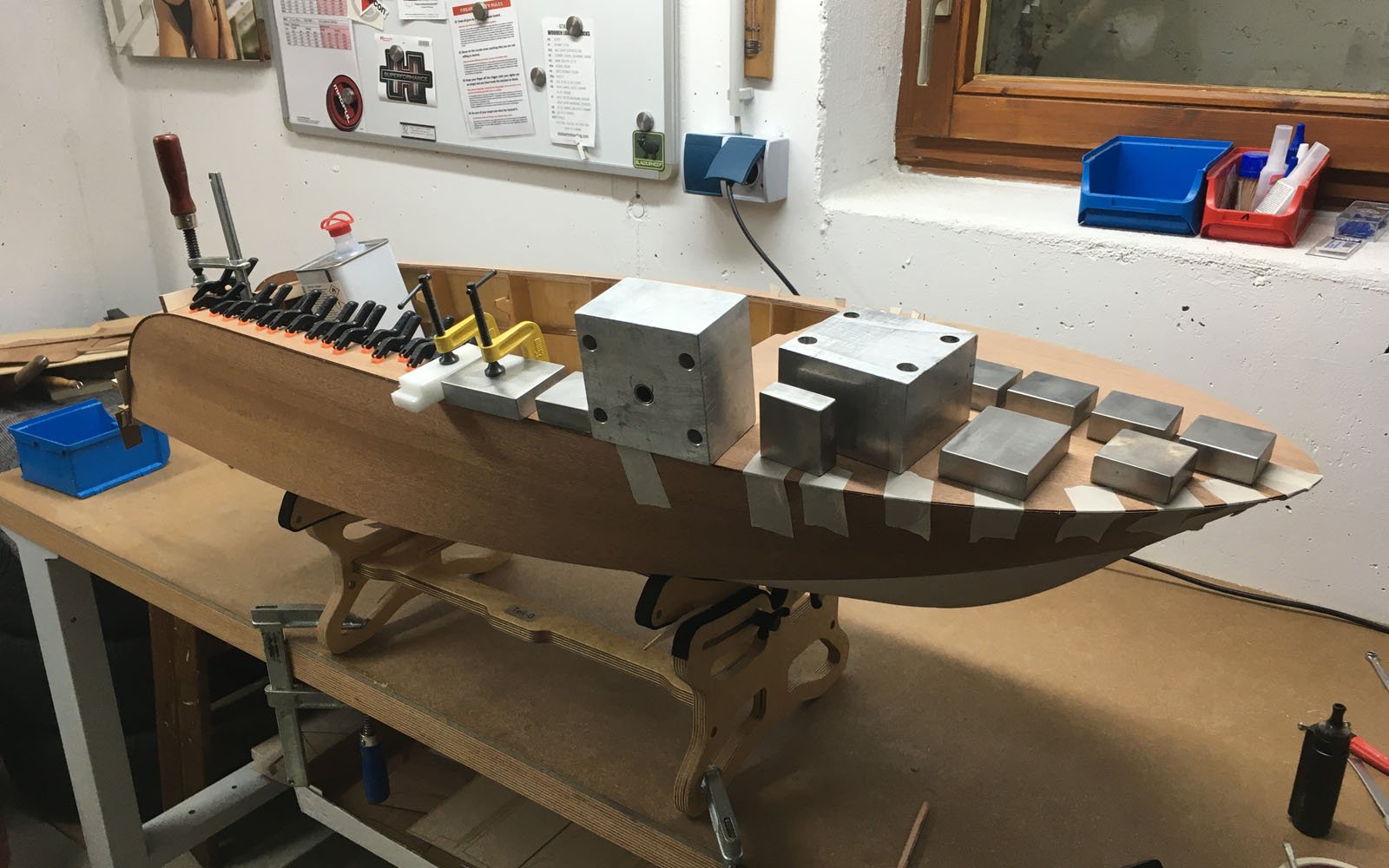
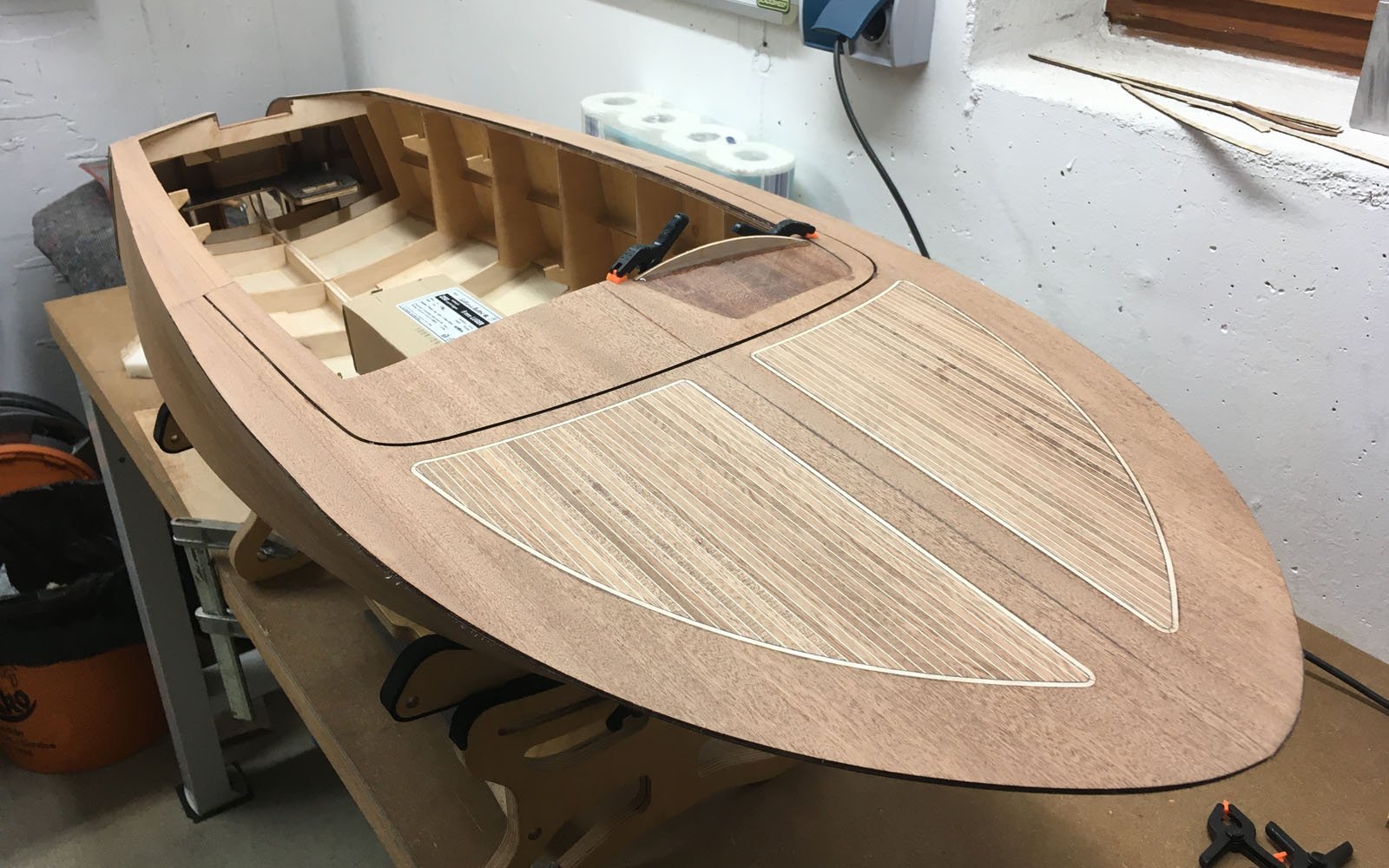
Now that all the work has been done on the hull, we can finally get to the deck. We glued the first and second layers of mahogany veneer to the frame structure with white glue, as described by aero-naut. The only deviation, we did not paint anything with pore filler. Since the whole boat is then painted with Miposeal, this is not necessary and the gluing holds better. After the white glue has hardened, the second layer has already been sealed with Miposeal, as we want to glue the third layer of mahogany with resin. In my opinion, this is necessary because the inlays are to be glued in with 2-component adhesive and you also get a, how should I say, a compensation layer.
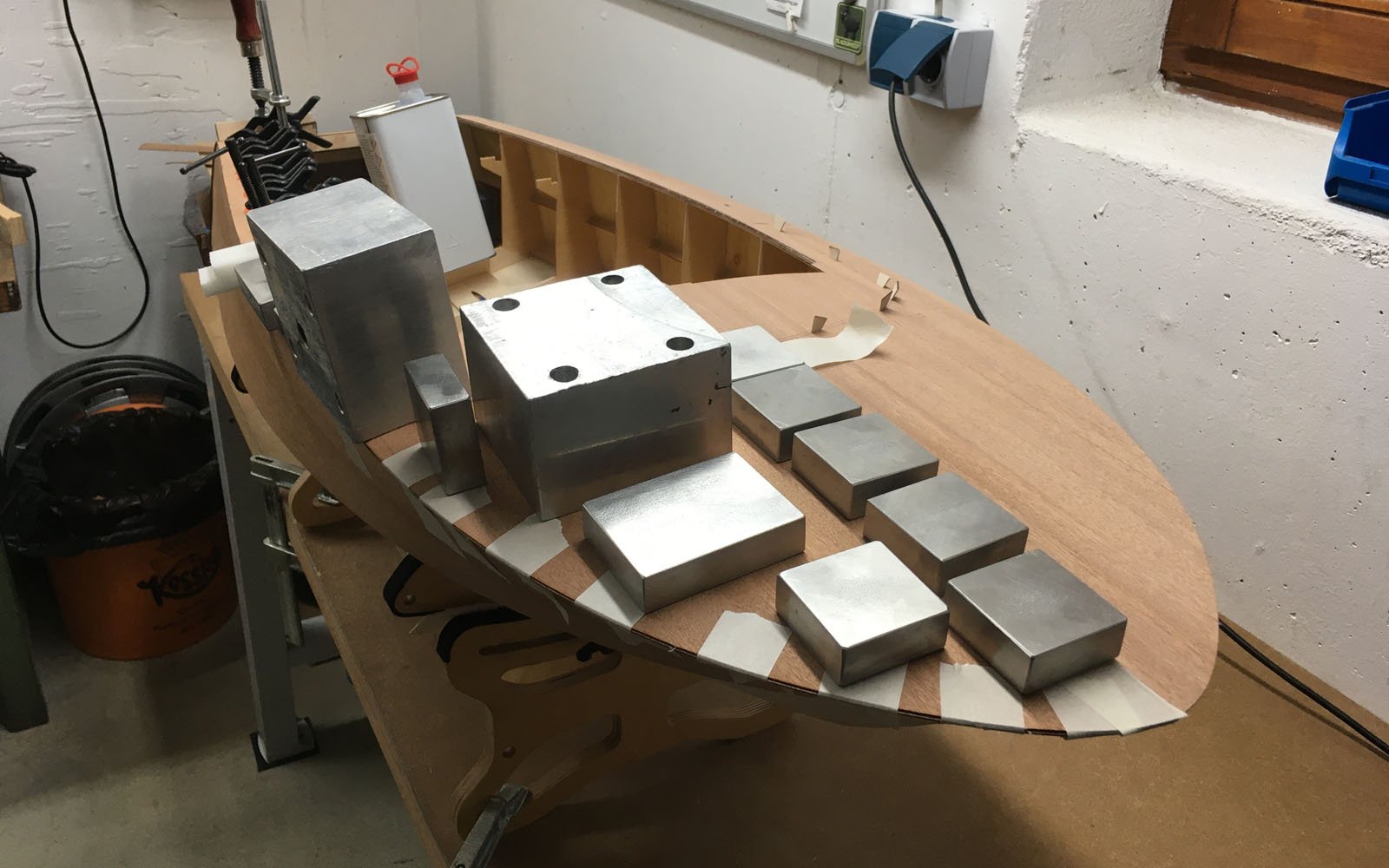
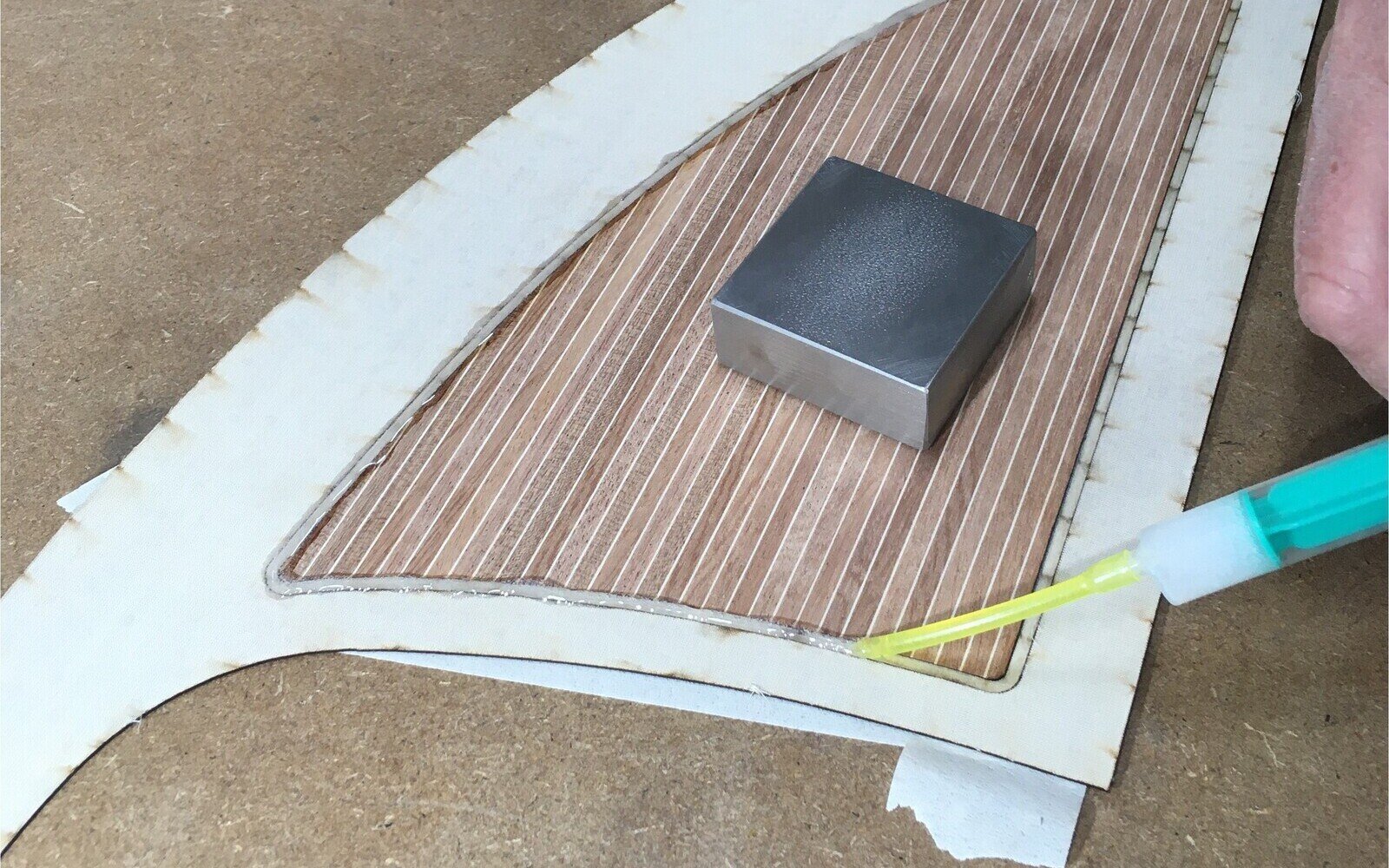
As described by aero-naut, we inserted the inlays into the top layer and glued them to the underside with 2-component adhesive (our resin). Since the whole thing should ultimately be nice and flat, we put cling film on it and weighed the whole thing down properly to harden. So we let it dry for a good day and then glued it to the second layer with resin, as already mentioned. With a great result, as we think.
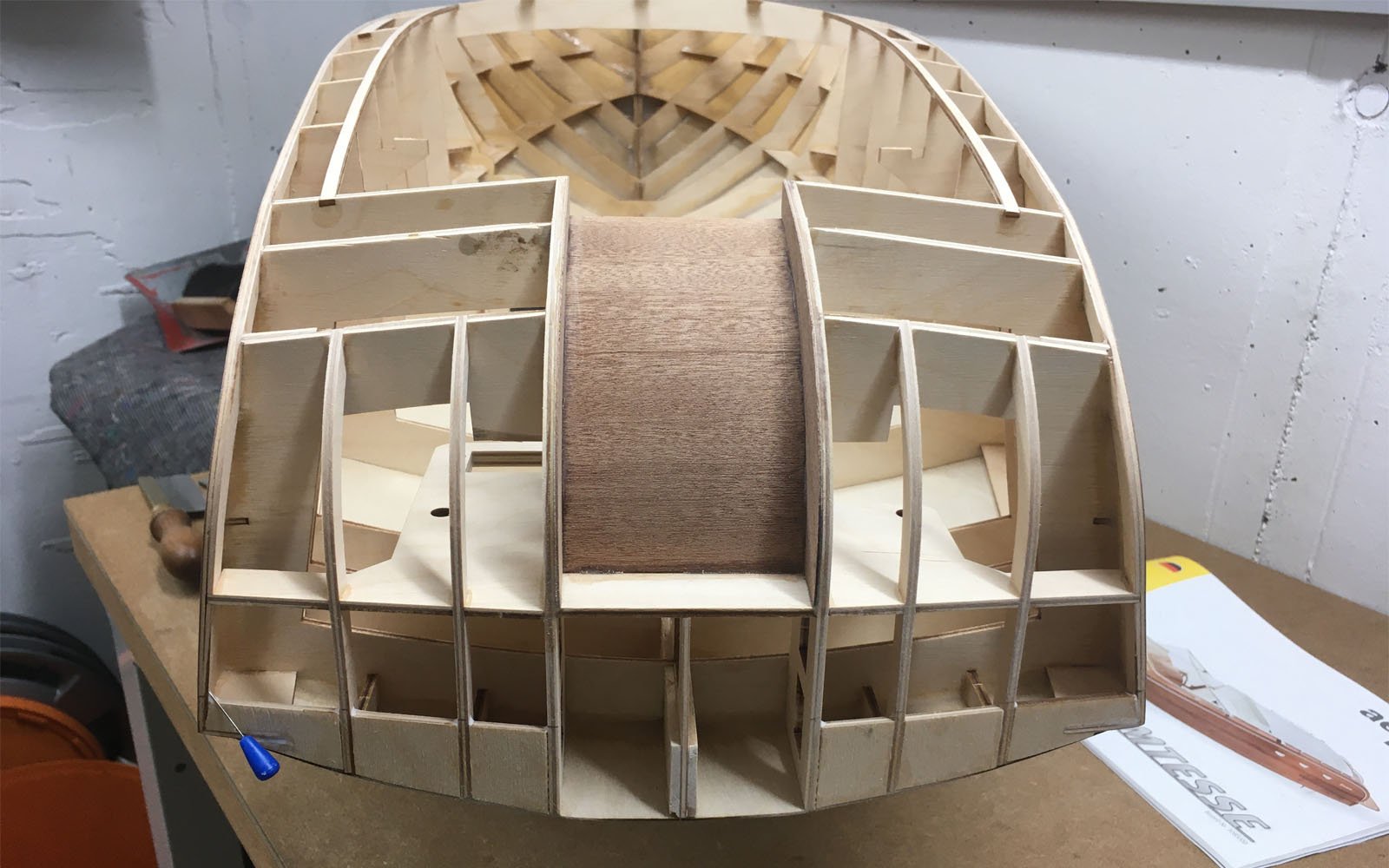
We would also like to plank the transom in three layers, as there is enough material left over from the mahogany. For this purpose, the frame structure was now doubled and then the rest of the part in the stern was closed in the same way as the deck.
Now only the rubbing strakes had to be glued to the bow area and the side rails and we can sand the whole boat and seal it with our epoxy resin HT 2.


Has your interest been piqued? Then go here: Part 2